sponsor

sponsor

Slider

Theme images by kelvinjay. Powered by Blogger.

Search This Blog

Blog Archive

Business

[Business]

Flickr Widget

Recent Tube

Business

Technology

Life & style

Games

Sports

Fashion

Govt hikes POL prices by more than Rs2 per litre

Image result for Govt hikes POL prices by more than Rs2 per litre
ISLAMABAD: The government on Tuesday hiked prices of petroleum products by more than Rs2 per litre.
Speaking at a news conference here, Finance Minister announced revised rates of petroleum products for the month of February.
The price of petrol was increased by Rs2.25 per litre, while that of diesel by Rs2.26 per litre.
The prices of kerosene oil and light diesel were maintained at Rs43.25 and Rs43.34 per litre respectively.
Dar said the government rejected OGRA's recommended hike in POL prices. "The government will provide Rs4 billion subsidy due to lesser hike in prices," he added.
OGRA had proposed an increase of Rs4.16 per litre for petrol, Rs4.29 for diesel, Rs16.71 for kerosene oil, Rs12.53 for light diesel oil and Rs12.47 for HOBC.
It is pertinent to mention that the government had increased the price of petroleum products on January 15.
The price of petrol was increased by Rs1.77 per litre while the tariff of high-speed diesel oil was increased by Rs2.

Apple iPhone sales beat estimates

Apple iPhone sales beat estimates
Apple Inc reported a bigger-than-expected rise in iPhone sales for the holiday quarter but forecast current-quarter revenue below estimates as customers hold back on phone upgrades in anticipation of the launch of the 10th-anniversary iPhone.
Apple sold 78.29 million iPhones in the first quarter ended Dec. 31, up from 74.78 million last year, marking the first quarterly growth in iPhone sales in a year.
Analysts on average had estimated iPhone sales of 77.42 million, according to research firm FactSet StreetAccount.
The results, which reflected the first full quarter of iPhone 7 sales, come at a time when global demand for smartphones is slowing and cheaper Android alternatives are flooding the market.
Apple's services business, which includes the App Store, Apple Pay and iCloud, recorded an 18.4 percent growth in revenue, helped by the popularity of games such as Pokemon Go and Super Mario Run and higher revenue from subscriptions.
The company forecast total revenue of between $51.5 billion and $53.5 billion for the current quarter. Analysts, on average, had expected revenue of $53.79 billion, according to Thomson Reuters I/B/E/S.
The company's net income fell to $17.89 billion, or $3.36 per share, in the quarter from $18.36 billion, or $3.28 per share a year earlier. Analysts on average had expected $3.21 per share, according to Thomson Reuters I/B/E/S.
Revenue rose 3.3 percent to $78.35 billion in the quarter, compared with the average estimate of $77.25 billion.

Warren Buffett: I bought $12 billion of stock after Trump won

Warren Buffett: I bought $12 billion of stock after Trump won
The failure of Warren Buffett's favored candidate to capture the White House has not dimmed the billionaire's appetite for stocks.
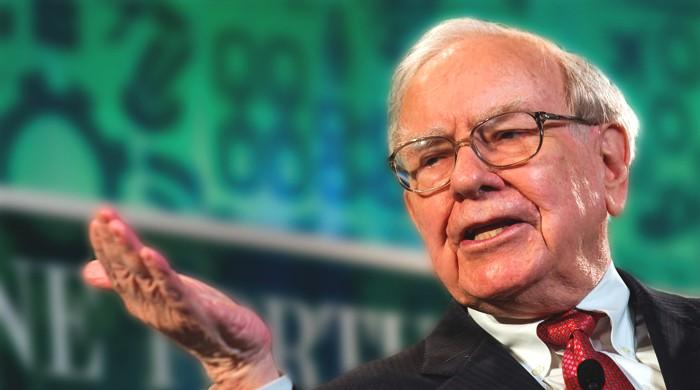
Buffett revealed that he has bought $12 billion of stock for his company Berkshire Hathaway Inc since the Republican Donald Trump beat Democrat Hillary Clinton in the November 8 US presidential election.
In an interview with talk show host Charlie Rose that aired on Friday night, Buffett suggested that Berkshire's post-election stock purchases overall were even higher, reflecting stocks that his deputies Todd Combs and Ted Weschler bought.
"We've, net, bought $12 billion of common stocks since the election," Buffett said. "The guys that work with me, the two fellows, they probably bought a little bit or sold a little bit too."
The speed with which Berkshire is buying stocks is unusual. It has spent in fewer than three months roughly half what it spent on equities in the three years ending September 30, 2016.
Buffett demurred on whether Berkshire has added to its stakes in the four largest US airlines: American Airlines Group Inc, Delta Air Lines Inc, Southwest Airlines Co, and United Continental Holdings Inc. Berkshire revealed those stakes in mid-November, surprising many, given Buffett's long aversion to the sector.
Asked why Berkshire dove in, Buffett said: "It was in large part my decision."
Berkshire will likely by February 14 disclose some of the stocks it has bought, in a regulatory filing listing most of its US holdings as of the year end.
The Omaha, Nebraska-based conglomerate owned $102.5 billion of equities, as of September 30, excluding its stake in Kraft Heinz Co.
US stocks rose after Trump was elected, reflecting investor optimism that his policies might boost economic growth, aided by a Congress also under Republican control.
Buffett said Trump is unlikely to reach his goal of 4 percent annual growth, but that growth at half that level would over a generation add $19,000 per person to real gross domestic product. "Two percent will produce miracles," Buffett said.
The US economy grew by 1.6 percent last year, the lowest since 2011.

PSX-100 surges by 463 points on news of new SECP products

PSX-100 surges by 463 points on news of new SECP products
KARACHI: Waning political concerns, and the reported introduction of newer financial products (particularly leverage-featured) by the Securities and Exchange Commission of Pakistan, kept investor confidence intact, pushing the index higher on Wednesday.
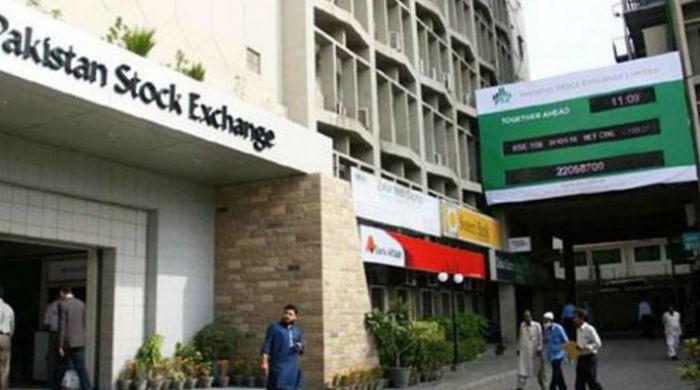
The Pakistan Stock Exchange went up 1.43%, an increase of 463 points, to close at 49,221 points. The overall turnover remained at 356 million shares, which is relatively lower than the 10-days moving average of 457 million shares.
Major gainers for the day were HUBC (+3.81%, US$4.96 million), SEARL (+4.95%, US$3.92 million) and BAHL (+3.75%, US$0.13 million).
The scrip specific volumetric chart was topped by KEL (-1.15% US$6.70 million), DSL (+2.76%, US$0.55 million) and ASL (+4.74%, US$4.17 million).
Top value leaders for the day were TRG (+4.99%, US$9.33 million) followed by ATRL (+0.91%, US$8.17 million) and SNGP (+4.31%, US$7.34 million).

India no longer fastest growing large economy following demonitisation: IMF

WASHINGTON: Modi government`s demonization policy has backfired on the Indian economy as the International Monetary Fund suggests that cancelling nearly 90% of cash in circulation coasted India the mantle of world’s fastest-growing large economy in 2016.
India no longer fastest growing large economy following demonitisation: IMF
In its World Economic Outlook report, IMF said that India’s growth slowed to 6.6% last year from 7.6% in 2015, while the Chinese economy grew by 6.7% in 2016.
The IMF said it trimmed its 2016 forecast for India by one percentage point “primarily” because consumers tightened their purse-strings after demonisatisation.
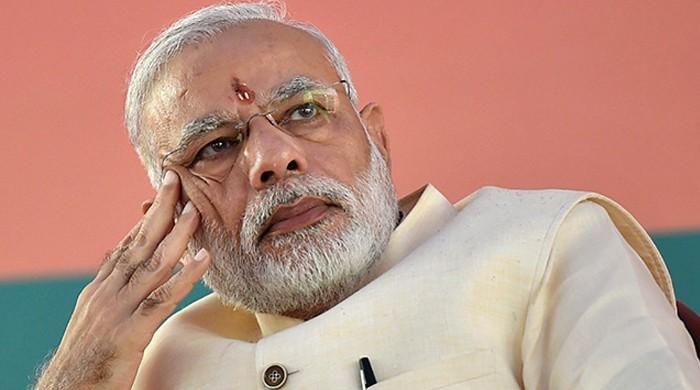
Indian Prime Minister Narendra Modi ordered the withdrawal of 500 and 1,000 rupee notes from circulation in a shock announcement designed to tackle widespread corruption and tax evasion.
Modi said that while people could exchange their old notes for new bills at banks or post offices until the end of the year, or deposit them in their accounts, they would no longer be legal tender from midnight.
"To break the grip of corruption and black money, we have decided that the 500 and 1,000 rupee currency notes presently in use will no longer be legal tender from midnight that is 8 November 2016," he said in a televised address to the nation.
"This means that these notes will not be acceptable for the transaction from midnight onwards."
After a one-day shutdown of all banks and ATMs, new 500 and 2,000 rupee denomination notes would be issued from Thursday by the Reserve Bank of India (RBI), the country´s central bank.
The 500 and 1,000 notes, which are worth around $7.50 and $15 respectively, are the largest bills in use in India which is still a massively cash-intensive economy.
Since coming to power in 2014, Modi has pledged to crack down on so-called black money -- vast piles of wealth kept hidden from the tax authorities -- with a series of new measures, including 10-year jail terms for evaders.
The latest announcement comes a little over a month after the government raised nearly $10 billion through a tax amnesty for Indians to report undeclared income and assets.
But many ordinary Indians say they support the scheme if it forces the rich to pay their taxes by making them bank undeclared income. Only a handful of states observed a call for a nationwide protest strike.
"We are protesting against the undeclared financial emergency imposed by the government and the hardships people across the country are facing because of this illegal decision," said Manish Tiwari of the opposition Congress party.
"The decision to demonetise high-value currency was done without any authority and legislation and is clearly illegal."
Owners of the banned 500 and 1,000 rupees ($7.30, $14.60) notes have until the end of the year to deposit them in a bank, and can only directly exchange a small number for the new currency.
But authorities have struggled to print enough new notes to meet demand and economists say the ensuing cash crunch will hit growth.
Former Prime Minister Manmohan Singh, a respected economist, said last week it would shave at least two percentage points off growth, which topped seven percent in the first half of the financial year.
"I do not disagree with the objectives but it is a monumental case of mismanagement," the Congress party lawmaker told parliament.
"The way demonetisation has been implemented, it will hurt agricultural growth and all those people working in the informal sector."
Over 90 percent of transactions in India are conducted in cash and many of the country's poorest have no access to banking.
Many have been left without enough cash to buy food or daily essentials, while farmers have been unable to buy seeds and small traders say business has fallen off a cliff.
Nonetheless, Modi has repeatedly defended the scheme, accusing its detractors of being tax evaders and urging all Indians to switch to non-cash payment methods.

Samsung probe finally finds cause of Note 7 fires

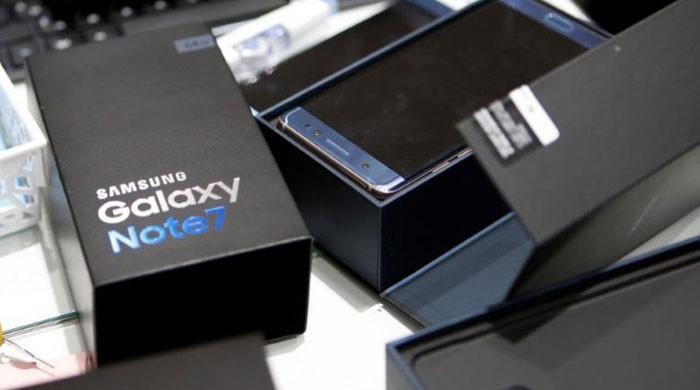
SEOUL: A Samsung Electronics Co Ltd investigation into what caused some Galaxy Note 7 smartphones to catch fire has concluded that the battery was the main reason, a person familiar with the matter told Reuters on Monday.

Samsung probe finally finds cause of Note 7 fires
The world's biggest smartphone maker is seeking to put behind it one of the biggest product safety failures in tech history as it prepares to launch the Galaxy S8, one of its flagship phones, sometime in the first half of this year.
Investors and analysts say it is critical for Samsung to provide a convincing and detailed explanation about what went wrong with the Note 7 and how it will prevent such problems from recurring if it is to regain consumer trust.
"They've got to make sure they come clean and they've got to reassure buyers as to why this won't happen again," said Bryan Ma, Singapore-based analyst for researcher IDC.
The results of the investigation will likely be announced on Jan. 23, a day before it announces detailed fourth-quarter earnings results, said the person, who was not authorized to speak publicly on the matter and declined to be identified.
Koh Dong-jin, head of Samsung's mobile business, will likely announce the results as well as new measures the firm is taking to prevent similar problems in future devices, the person said.
A Samsung spokesman declined to comment.
Samsung initially announced a recall of some 2.5 million Note 7 phones in September and identified the cause of the fire as a manufacturing process problem at one of its suppliers, later identified as affiliate Samsung SDI Co Ltd.
But new Note 7s with what Samsung said were safe batteries from a different supplier continued to catch fire, forcing the company to permanently halt sales of the device and dealing a 6.1 trillion won ($5.2 billion) blow to Samsung's operating profit over three quarters.
"To me it'd be surprising if they said it was a supplier issue," IDC's Ma said, adding he suspects Samsung may not have given enough room for the battery inside the phone.
The company in October said it will examine all aspects of the phone, including hardware design and software, and would hire third-party firms as part of its probe.
The source told Reuters on Monday that Samsung was able to replicate the fires during its investigation and that the cause for the fires could not be explained by hardware design or software-related matters.
While prospects for its smartphone business this year remain a major question mark for Samsung, profits are expected to rise sharply on the back of rising memory chip prices and growing sales of organic light-emitting diode screens for smartphones.

New taxi app books a ride for Ivory Coast middle class

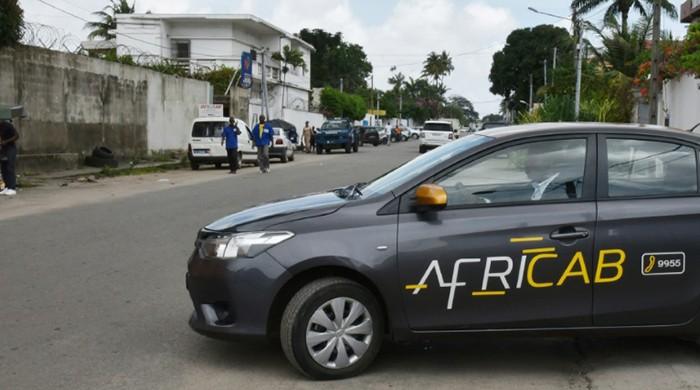
ABIDJAN: In bustling Abidjan, a home-grown company has tapped into the global taxi app revolution that has spawned Uber and other online transport networks.

While Uber haNew taxi app books a ride for Ivory Coast middle classs already jumped into several African markets from South Africa to Egypt, Africab seeks to provide Ivory Coast's emerging middle class with a locally-owned high-tech and reliable travel option.
Africab's clients can use the company app to book its taxis -- which cannot be hailed in the road, and it advertises its services only online.

It's fixed fares tend to be higher than for regular taxis, but clients benefit from extra perks.
A daytime trip that would cost around 2,000 CFA francs ($3.2, three euros) in an old cab can cost 3,300 CFA francs in an Africab.
But the start-up's sleek vehicles -- which are owned by the company, not by the driver -- are all air-conditioned. They are fitted with tablet devices and offer free wi-fi internet access.
"Brr, it's cold inside!" jests Ivorian comedian Michel Gohou in an advertising video for Africab's fleet.
"Africab is the new way of getting around," brags Vangsy Goma, the founder and managing director of the firm.
The company, Goma says on Africab's website, seeks "to build an entrepreneurial culture that is based on technology and respects African identity."
The idea for Africab came from trying to navigate Abidjan's unruly traffic, says Goma, a native of the Republic of Congo educated in the US and Europe and married to an Ivorian woman.
Tapping into growth
"When I came here, I often had difficulty organising journeys. You had to get out on the street, haggle... or sometimes rent a car and brave the traffic," he said.
"The cars (regular taxis) were dilapidated; they are often more than 20 years old. Drivers are badly trained and for the most part, there is no air-conditioning."
Until political strife erupted in 2010-11, Ivory Coast had long been the star economic performer in west Africa.
But when former president Laurent Gbagbo refused to step down despite an election defeat, 3,000 people were killed in months of conflict.
With a 10-percent yearly economic growth rate, the West African country is now back on the rails.
The International Monetary Fund said last month that it was on track towards becoming the continent's fastest-growing economy.
Companies like Africab are tapping into the budding optimism that the upward trend has brought.
Its launch in February 2016 cost one billion CFA francs (1.5 million euros, $1.6 million) in investment, of which 800 million was raised by bank loans.
Goma is confident about expanding the firm, with a monthly turnover that rose from 20 million CFA francs in April to 60 million by September and a fast-growing portfolio of business clients.
In coming weeks, he says, Africab taxis will take to the streets of Lome and Cotonou, the capital of Togo and the economic capital of Benin.

To make it work, the company is striving to adapt its services to local needs.
As is often the case in African towns and cities, many of Abidjan's backstreets and alleys have never been named.
To get round this, Africab maps the addresses of clients and familiar landmarks.
And in a striking contrast with ordinary taxis, Africab drivers are bound to abide by the Highway Code.
Less stress
Driving on pavements or in emergency lanes to avoid traffic jams is strictly banned, and all company cabbies have to retake both driving and Highway Code tests.
Satisfied client Fatou Bamba, who manages her own company, finds Africab's cars clean and comfortable -- plus there's the internet bonus.
"Above all, you're safe... You can work inside an Africab and you don't feel the stress of driving and the traffic jams," Bamba said.
Taxi driver Ahi Mian, 32, appears happy to have joined Africab's fleet.

"It's better for me. I drove a (regular) taxi before. Here we have fixed hours and the car is air-conditioned. But above all, there's less stress," he says.

Not enough investment in renewables: IRENA

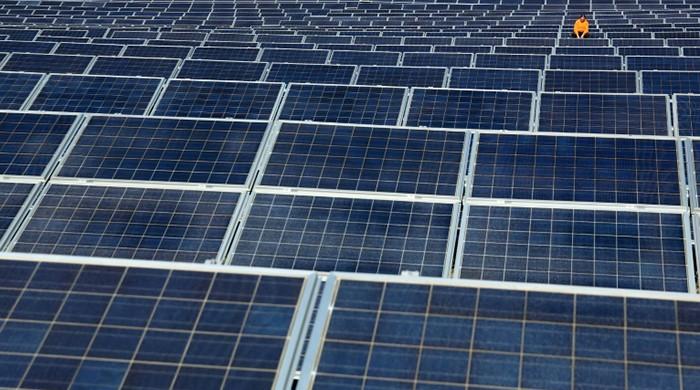
Money invested in renewable energy is not enough to reach a climate goal of limiting global warming to 2.0 degrees Celsius, an Abu Dhabi-based green energy organisation said Sunday.

Not enough investment in renewables: IRENA
Investment in renewables has increased dramatically in the last decade, but "the rate of growth is not sufficient yet to meet the climate goals", Adnan Amin, the head of renewable energy agency IRENA said.

His comments come less than a week before the inauguration of US President-elect Donald Trump, a climate sceptic who has promised to "cancel" a 196-nation deal to kerb global warming.

The landmark climate pact signed in December 2015 sets the goal of limiting average global warming to 2.0 degrees Celsius (3.6 degrees Fahrenheit) over pre-Industrial Revolution levels, by cutting greenhouse gases from burning fossil fuels.

Countries, including the United States, have pledged to kerb emissions under the deal by shifting to renewable energy sources.

But a recent IRENA report said the current share of renewable energies in the global energy mix of 18 percent should double by 2030 to keep global warming under 2.0 degrees.

To achieve this, "investments must be scaled up from some $305 billion in 2015 to an average of $900 billion per year between 2016 and 2030," Amin said at the agency's annual conference.

Renewable energies have become drastically cheaper thanks to recent developments in technology, he said, allowing them to become a "preferred solution", even despite a decline in fossil fuel prices.

The IRENA report said solar panels "costs –- now half of what they were in 2010 -– could fall by another 60 percent over the next decade".

"Off-grid renewables provide electricity to an estimated 90 million people worldwide," it added.

Black Lady Liberty to grace US coin

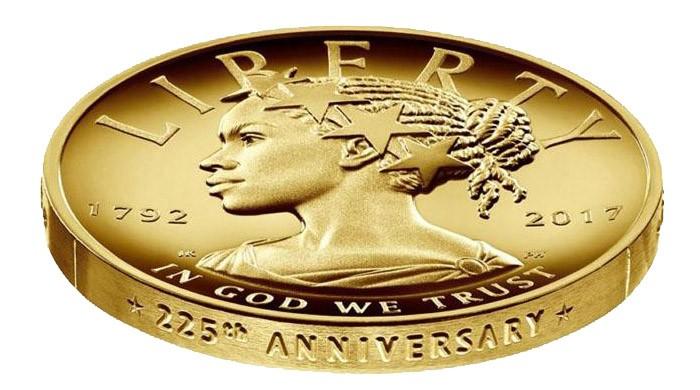
WASHINGTON: The United States is set to issue a commemorative $100 gold coin that depicts Lady Liberty -- a national symbol generally portrayed as a white woman -- as an African-American for the first time.
Black Lady Liberty to grace US coin
The 24-karat gold piece will be released in honour of the United States Mint´s 225th anniversary, one of a series of coins that will feature a racially diverse array of Lady Liberties.
The coins will "depict an allegorical Liberty in a variety of contemporary forms -- including designs representing Asian-Americans, Hispanic-Americans and Indian-Americans among others," the Mint said in a statement released Thursday.
The Mint said it is issuing the coins to "reflect the cultural and ethnic diversity of the United States."
The new coin will be released on April 6 featuring the bust of a distinctly African-American Liberty, with a crown of gold stars.
Underneath appear the words "In God we trust" and the dates 2017 and 1792, the year Congress created the Mint.
The coin´s flip side features another potent US symbol, an eagle in flight.
"Our founding fathers realised the critical need for our fledgeling nation to have a respected monetary system, and over the last 225 years, the Mint has never failed in its mission," said Rhett Jeppson, the Mint´s principal deputy director.
In another move to diversify a white male cast of statesmen featured on American currency, the onetime slave-turned-abolitionist Harriet Tubman was named as the new face of the $20 banknote last April, the first time an African American was picked to feature on US currency.
An open poll of more than 600,000 people strongly favoured Tubman, a hero to African Americans for her escape from slavery in Maryland in 1849 to help run the legendary Underground Railroad that enabled thousands of slaves to flee to freedom in the 19th century.

Eight men own half the world’s wealth: Oxfam

LONDON: Eight men own the same wealth as half the world´s population, a level of inequality which "threatens to pull our societies apart", Oxfam said on Monday ahead of the World Economic Forum opening in Davos.
Eight men own half the world’s wealth: Oxfam
The wealth of the world´s poorest 3.6 billion people is the equivalent to the combined net worth of six American businessmen, one from Spain and another from Mexico.
Picked from Forbes´ billionaires list, they include Microsoft founder Bill Gates, Mark Zuckerberg who co-founded Facebook, and Jeff Bezos, founder of Amazon.
Oxfam pointed to a link between the vast gap between rich and poor and growing discontent with mainstream politics around the world.
"From Brexit to the success of Donald Trump´s presidential campaign, a worrying rise in racism and the widespread disillusionment with mainstream politics, there are increasing signs that more and more people in rich countries are no longer willing to tolerate the status quo," Oxfam said in its new report, "An economy for the 99 percent".
The charity said new data on wealth distribution from countries such as India and China had prompted it to revise its own calculation, having said a year ago the wealth of half the world´s population was in the hands of 62 people.
Inequality will be among the issues topping the agenda as the world´s political and business elite meet in Davos from Tuesday until Friday, when 3,000 people will gather for the annual meeting of the World Economic Forum.
"Responsive and responsible leadership" has been chosen as the theme of the summit, which organisers said was a response to a "backlash against globalisation leading to two surprising vote results and a rise in populism in the West".
In its report Oxfam called for an increase in tax rates targeting "rich individuals and cooperations", as well as a global agreement to end competition between countries to lower corporate tax rates.
The charity also decried lobbying by corporations and the closeness of business and politics, calling for mandatory public lobby registries and stronger rules on conflicts of interest.

Mahira Khan New song Udi Udi Jaye made people fall

Mahira Khan New song Udi Udi Jaye made people fall

Mahira Khan New song Udi Udi Jaye made people fall

Pakistani actress, model, VJ and host. She has marked her name in Pakistan’s media industry through her hard work, talent and her uber chic style. She is among list of 10 sexiest Asian Women. She has fetch millions of fans across the border.

Mahira Khan was born on 21st December, 1984. She started her career as a VJ and then started acting and modeling and touched the heights of sky. She is a rising star. She is one of highest paid Pakistani actresses. She has done a number of Hit Pakistani dramas that include Humsafar Sadqay Tumhare and Bin Roye. Mahira Khan has worked in 3 Pakistani movies that include Ho Mann Jahan, Bin Roye and BOL. Mahira Khan also hosted a show The Brighter Side of Life.. Mahira Khan has just made her Bollywood debut with Raees opposite Shahrukh Khan.
The first song of the movie O Zalima has already impressed the fans. The game is not over. Yet Mahira Khan’s second song Udi Udi Jaye made people fall head over heels. Mahira Khan has done a great job. Her chemistry with Shahrukh Khan is amazing. Mahira Khan’s eastern innocence has gracefully blended with modest personality. Her makeup, dressing, acting everything is superb.

  1. song udi udi jaye
  1. new song udi udi jaye
  1. khan new song udi udi
  1. mahira khan new song udi
  1. song udi udi


World Bank revises Pakistan’s growth rate upward

World Bank revises Pakistan’s growth rate upward


World Bank revises Pakistan’s growth rate upward

ISLAMABAD: World Bank has revised Pakistan’s growth rate upward to 5.2 percent for the fiscal year 2017 and 5.5 percent for 2018.
The bank previously estimated growth in Gross Domestic Product (GDP) of Pakistan 5 percent and 5.4 percent respectively, a private news channel reported.
The report “Global Economic Prospects; weak investment in uncertain times”, states that the uptake in activity was spurred by a combination of low commodity prices, rising infrastructure spending, and reforms that lifted domestic demand and improved the business climate.
In Pakistan, growth is forecast to accelerate from 5.5 percent in the fiscal year 2018 to 5.8 percent a year in the fiscal year 2019-20, reflecting improvements in agriculture, infrastructure, energy, and external demand.
The report further mentioned the successful conclusion of Special Drawing Rights (SDR) 4.393 billion IMF Extended Fund Facility (EFF) programme, aimed at supporting reforms and reducing fiscal and external sector vulnerabilities, lifted consumer and investor confidence.
The China-Pakistan Economic Corridor (CPEC) project will increase investment in the medium-term, and alleviate transportation bottlenecks and electricity shortages


Analysts warn pre-election populist decisions can derail economy

Analysts warn pre-election populist decisions can derail economy

Analysts warn pre-election populist decisions can derail economy
KARACHI: The government’s soft-pedalling on the reforms it had promised four years back showed the economy is no more a priority ahead of 2018 polls as it offered a number of politically motivated incentives/amnesties to reflate the growth, analysts said on Wednesday, warning further stimuli will only put pressure on the country’s fiscal account.
“This is the pre-election year and the government needs policies and decision to strengthen its vote bank. Therefore, I do not see a tax-heavy budget or any significant rise in petroleum prices going forward,” Khurram Schehzad Chief Operating Officer at JS Global Capital said.
“We see slippages on the expenditure side vis-à-vis foreign debts even if the government opts for productive populists decisions such as the Rs180 billion export package announced quite recently.”
He explained that even if the government opts for infrastructure development alone or announces support packages for industry, the foreign/domestic debts are the only source to fund the same.
“Pakistan’s current account remains sensitive as a couple of repayments are due this year, while foreign direct investment (FDI) is low and export market has become quite competitive translating into limited support from export receipts,” Schehzad said.
He also pointed up the fact the Pakistan Muslim League-Nawaz (PML-N) regime is strained under unsuccessful tax amnesty schemes, while the collection targets remain grossly missed and now, another such reprieve is in the offing but it’s no use pinning hopes on any.
“Amnesty would not yield results unless availed. Besides, such decisions discourage honest taxpayers,” Khurram Schehzad added. Giving his viewpoint, Khawaja Amjad Waheed, CEO of NBP Fullerton Asset Management (NAFA) said,” The fiscal targets for the current year are set to be missed.”
“The targets will not be met due to slippages on the expenditures side amid higher spending by federal and provincial governments before next general elections scheduled in early 2018, no IMF oversight and government’s reluctance to implement further revenue mobilization measures because of election considerations”.
A report issued by Elixir Securities highlights several macro-economic challenges such as higher fiscal slippages on account of populist measures prior to election year, monetary tightening, resurgence in commodity prices, external account pressures emanating from surging current account deficit, flattish remittances and upcoming debt repayments.
On the external account front, Khawaja Amjad Waheed expects the current account deficit to widen in fiscal year 2016-17 due to higher imports especially plant/equipment and energy-related machinery, subdued exports and stagnating remittances.
“However, an overall balance of payments position is likely to remain comfortable on account of higher external loan inflows and some increase in FDI. Nonetheless, if remained unaddressed, the sluggish exports would eventually pose serious risks to medium-term balance of payments sustainability and threaten the recent economic gains”.
Ahmed Lakhani at JS Global Capital says a significant portion of an export package worth Rs180 billion was directed towards boosting the sector’s competitiveness, while its market share was constantly being gnawed away by the likes of Bangladesh and Vietnam with pro-export policies by their respective governments.
“To counter this trend, the government has provided a number of incentives to the textile sector, which will significantly benefit textile exports.” Taking a similar line, Arslan Hanif at Arif Habib Limited said,” The much awaited export package should help exporters reduce their cost of doing business and compete against regional peers.” 
“The textile package is a positive for the textile manufacturers and will push exporters to bring in additional USD proceeds, resulting in higher FX reserves in turn helping the USD/PKR dollar parity to remain stable.” However, analysts are unanimous that the looming macro-economic challenges are manageable and prospects for the domestic economy look upbeat in 2017.
Just to jog your memory, Pakistan’s economic performance has remained fairly robust in 2016 mainly supported by the favorable global economic environment and partially due to some economic reforms measures undertaken by the government under the IMF program.
Gross Domestic Product (GDP) growth reached an eight year high of 4.7 percent; external account position remained comfortable, as captured in healthy foreign exchange reserves accumulation though primarily on the back of fresh loans and a stable exchange rate; inflation averaged at around 3.7 percent during 2016 mainly helped by the steep fall in global oil prices, which allowed central bank to continue with its accommodative monetary policy; and fiscal deficit stayed contained, narrowing to 4.6 percent of GDP during the last fiscal year.

Amazon removes India flag doormats after visa threat

Amazon removes India flag doormats after visa threat

Amazon removes India flag doormats after visa threat
NEW DELHI: Amazon said Thursday it has withdrawn doormats featuring Indian flag from sale after New Delhi called them "insulting" and threatened to expel the company´s foreign workers.
Indian Foreign Minister Sushma Swaraj tweeted late Wednesday that the mats, available only on Amazon´s Canadian site, were an "unacceptable" insult to the national flag and demanded an apology.
On Thursday the company said it had responded by removing them from sale.
"We have removed the products from the website following the Indian demand," said a company spokeswoman who asked not to be named.
Swaraj, an avid tweeter with nearly seven million followers, issued her ultimatum after a Twitter user sent her a screengrab of the doormats on sale.
"Amazon must tender unconditional apology. They must withdraw all products insulting our national flag immediately," she tweeted.
"If this is not done forthwith, we will not grant Indian Visa to any Amazon official. We will also rescind the Visas issued earlier."
Amazon has made steady inroads in India since entering the competitive but rapidly-growing e-commerce market in 2013 with a pledge to invest $5 billion over six years.
The e-retailer found itself in similar trouble last year over doormats showing Hindu deities being sold on its US website.

Saudis cut oil output to lowest in two years, pledge further reductions

Saudis cut oil output to lowest in two years, pledge further reductions


Saudis cut oil output to lowest in two years, pledge further reductions
ABU DHABI: Saudi Arabia has cut oil output to its lowest in almost two years, its energy minister said on Thursday, as the world's largest oil exporter leads OPEC's drive to eradicate a global glut and prop up prices.


Energy Minister Khalid al-Falih said output had fallen below 10 million barrels per day - more than it had promised as part of a global output cut deal between OPEC and non-OPEC producers.

Such levels were last seen in February 2015, when Riyadh began to steeply raise production to deal a blow to US shale oil producers, effectively becoming the architect of a prolonged oil price crash.

Falih, speaking at the Atlantic Council Global Energy Forum in Abu Dhabi, said output was "not significantly below" 10 million bpd currently and the Kingdom planned to make even deeper cuts in February.

This means Saudi Arabia has cut oil production by more than the 486,000 bpd it agreed to late last year under a global deal to kerb production and stem a fall in oil prices.

Falih also said he expected the oil market to tighten in two to three years, aided by the agreement of OPEC and non-OPEC producers late last year to kerb production.

"We have been moving toward rebalancing the markets for some time," Falih said.

"Even better, the pace of rebalancing will be accelerated by recent production agreements within OPEC and outside. I have confidence in these agreements to bring stability to the global markets."

Falih predicted oil demand would grow by over 1 million barrels a day this year.

"I am confident that the combination of capping production by 25 countries and growth of demand will continue to balance and prices will respond accordingly," he added.

OPEC and non-OPEC producers last month reached their first deal since 2001 to curtail oil output jointly by nearly 1.8 million bpd for an initial six month period to help stem a fall in oil prices and ease a supply glut.

Falih said it was too early to tell if the deal would be extended but said parties to the deal indicated they were willing to extend if necessary.

"For us to project six months forward will be unwise now. All I could say is that everybody around the table in the last few weeks has indicated willingness to extend if necessary".

SHALE OIL NOT A BIG WORRY

Falih also said the prospect of higher cost shale oil production rising as oil prices firm was not a major cause of concern for the oil market.

"I wouldn't be worried by shale on its own ... I am sure that could be absorbed by a market that will be approaching 100 million (bpd) in the next few years."

While Falih said he did not have a specific oil price target, Iraqi oil minister Jabar Ali al-Luaibi told reporters at the same event Iraq wanted to see prices of around $65 a barrel.

"We are not in the business of managing prices... we will leave it to the market to determine the price," Falih said. "We wish for it to be less volatile but the reality today is it is a nervous market."

Brent crude prices LCOc1 were up $1 at $56.10 a barrel by 1458 GMT.

Luaibi said Iraq had slashed its exports by 170,000 bpd and was cutting them further by 40,000 bpd this week. He said Iraq was committed to the success of the production-cut agreement "even though it should have been exempted".

OPEC expects global oil inventories to fall by the second quarter of this year in response to the agreement, OPEC Secretary-General Mohammed Barkindo said.

Kuwait has cut its oil exports by more than 133,000 bpd mainly to customers in North America and Europe while maintaining full exports to Asia, Kuwaiti Oil Minister Essam Al-Marzouq said
Remittance cover for deficit falls 8pc to 71 percent

Remittance cover for deficit falls 8pc to 71 percent

Remittance cover for deficit falls 8pc to 71 percent

 
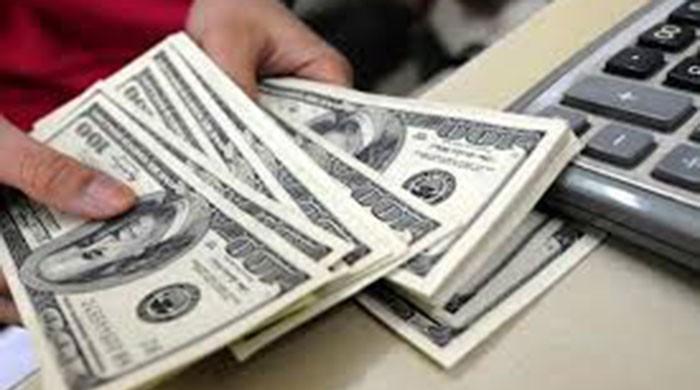
KARACHI: Cash sent home by Pakistanis living abroad is likely to provide 71 percent cover to the country’s trade deficit during the current fiscal year as tension in the Middle East and an oil slump are cooling the once red-hot growth in remittances, analysts said on Thursday. 
Insight Securities, a local brokerage house, in its latest report, raised alarm that weakening workers’ remittances could jeopardise the country’s balance of payment outlook amid rising trade deficit and lingering debt repayments, mounting pressure on reserves and currency.
Being the lifeblood of country’s balance of payments, remittances have invariably financed goods trade deficit and contributed 77 percent to the total trade deficit (goods, services and income) in the last 2 years, but not anymore, it added.
“The situation has started to deteriorate as exports have entered 11th consecutive quarter of decline, while home remittances' trend has also started to show signs of weakness,” analyst Zeeshan Afzal said in the report.  “After the first fall (in 14 quarters) witnessed in third quarter of 2016, remittances have remained stagnant at $4.7 billion in fourth quarter (4Q) (+0.8 percent YoY, +1.3 percent QoQ).”
Warning the remittances would only cover for the 71 percent of the total deficit (goods, services and income) in 2016 compared to 79 percent in 2015, the analysts forecast last year’s trade deficit yawning to a whopping $27.8 billion – the highest ever -- with exports going down by 4.4 percent and imports rising by 5.8 percent.
“During CY2016, remittance inflows have grown by a meager 2.3 percent (lowest growth rate since 2004) compared to 12 percent in 2015 and 18 percent in 2014," the report said. He blamed the depressed global demand, tightening US cross-border money transfer laws, and fiscal consolidation in Gulf Cooperation Council (GCC) countries were to be blamed for the last year’s tame flow of workers’ remittances into the whole South Asian region including Pakistan.
“Because the UAE-Pakistan and Saudi-Pakistan are among the lowest cost corridors in the world (as per 2015 data), therefore adverse economic conditions have profound impact on remittance inflows,” said the report.
Wrapping up his analysis, Afzal stressed the measures taken by the government to boost exports, raise tax from offshore accounts (through amnesty) or bring in investments/debt will be important to keep an eye on in 2017.
Furthermore, as per World Bank statistics published in Oct 2016, remittances to the low and middle income countries are likely to witness a meager 0.8 percent growth in 2016. Within this, India, the largest remittance receiver, is expected to see 5 percent dip, while Bangladesh and Nigeria would witness 12 percent and 2 percent fall respectively, in 2016.