sponsor

sponsor

Slider

Theme images by kelvinjay. Powered by Blogger.

Search This Blog

Blog Archive

Business

[Business]

Flickr Widget

Recent Tube

Business

Technology

Life & style

Games

Sports

Fashion

Govt hikes POL prices by more than Rs2 per litre

Image result for Govt hikes POL prices by more than Rs2 per litre
ISLAMABAD: The government on Tuesday hiked prices of petroleum products by more than Rs2 per litre.
Speaking at a news conference here, Finance Minister announced revised rates of petroleum products for the month of February.
The price of petrol was increased by Rs2.25 per litre, while that of diesel by Rs2.26 per litre.
The prices of kerosene oil and light diesel were maintained at Rs43.25 and Rs43.34 per litre respectively.
Dar said the government rejected OGRA's recommended hike in POL prices. "The government will provide Rs4 billion subsidy due to lesser hike in prices," he added.
OGRA had proposed an increase of Rs4.16 per litre for petrol, Rs4.29 for diesel, Rs16.71 for kerosene oil, Rs12.53 for light diesel oil and Rs12.47 for HOBC.
It is pertinent to mention that the government had increased the price of petroleum products on January 15.
The price of petrol was increased by Rs1.77 per litre while the tariff of high-speed diesel oil was increased by Rs2.

Apple iPhone sales beat estimates

Apple iPhone sales beat estimates
Apple Inc reported a bigger-than-expected rise in iPhone sales for the holiday quarter but forecast current-quarter revenue below estimates as customers hold back on phone upgrades in anticipation of the launch of the 10th-anniversary iPhone.
Apple sold 78.29 million iPhones in the first quarter ended Dec. 31, up from 74.78 million last year, marking the first quarterly growth in iPhone sales in a year.
Analysts on average had estimated iPhone sales of 77.42 million, according to research firm FactSet StreetAccount.
The results, which reflected the first full quarter of iPhone 7 sales, come at a time when global demand for smartphones is slowing and cheaper Android alternatives are flooding the market.
Apple's services business, which includes the App Store, Apple Pay and iCloud, recorded an 18.4 percent growth in revenue, helped by the popularity of games such as Pokemon Go and Super Mario Run and higher revenue from subscriptions.
The company forecast total revenue of between $51.5 billion and $53.5 billion for the current quarter. Analysts, on average, had expected revenue of $53.79 billion, according to Thomson Reuters I/B/E/S.
The company's net income fell to $17.89 billion, or $3.36 per share, in the quarter from $18.36 billion, or $3.28 per share a year earlier. Analysts on average had expected $3.21 per share, according to Thomson Reuters I/B/E/S.
Revenue rose 3.3 percent to $78.35 billion in the quarter, compared with the average estimate of $77.25 billion.

Warren Buffett: I bought $12 billion of stock after Trump won

Warren Buffett: I bought $12 billion of stock after Trump won
The failure of Warren Buffett's favored candidate to capture the White House has not dimmed the billionaire's appetite for stocks.
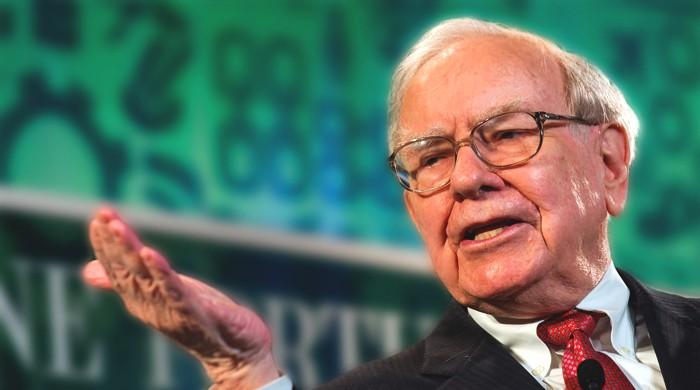
Buffett revealed that he has bought $12 billion of stock for his company Berkshire Hathaway Inc since the Republican Donald Trump beat Democrat Hillary Clinton in the November 8 US presidential election.
In an interview with talk show host Charlie Rose that aired on Friday night, Buffett suggested that Berkshire's post-election stock purchases overall were even higher, reflecting stocks that his deputies Todd Combs and Ted Weschler bought.
"We've, net, bought $12 billion of common stocks since the election," Buffett said. "The guys that work with me, the two fellows, they probably bought a little bit or sold a little bit too."
The speed with which Berkshire is buying stocks is unusual. It has spent in fewer than three months roughly half what it spent on equities in the three years ending September 30, 2016.
Buffett demurred on whether Berkshire has added to its stakes in the four largest US airlines: American Airlines Group Inc, Delta Air Lines Inc, Southwest Airlines Co, and United Continental Holdings Inc. Berkshire revealed those stakes in mid-November, surprising many, given Buffett's long aversion to the sector.
Asked why Berkshire dove in, Buffett said: "It was in large part my decision."
Berkshire will likely by February 14 disclose some of the stocks it has bought, in a regulatory filing listing most of its US holdings as of the year end.
The Omaha, Nebraska-based conglomerate owned $102.5 billion of equities, as of September 30, excluding its stake in Kraft Heinz Co.
US stocks rose after Trump was elected, reflecting investor optimism that his policies might boost economic growth, aided by a Congress also under Republican control.
Buffett said Trump is unlikely to reach his goal of 4 percent annual growth, but that growth at half that level would over a generation add $19,000 per person to real gross domestic product. "Two percent will produce miracles," Buffett said.
The US economy grew by 1.6 percent last year, the lowest since 2011.

PSX-100 surges by 463 points on news of new SECP products

PSX-100 surges by 463 points on news of new SECP products
KARACHI: Waning political concerns, and the reported introduction of newer financial products (particularly leverage-featured) by the Securities and Exchange Commission of Pakistan, kept investor confidence intact, pushing the index higher on Wednesday.
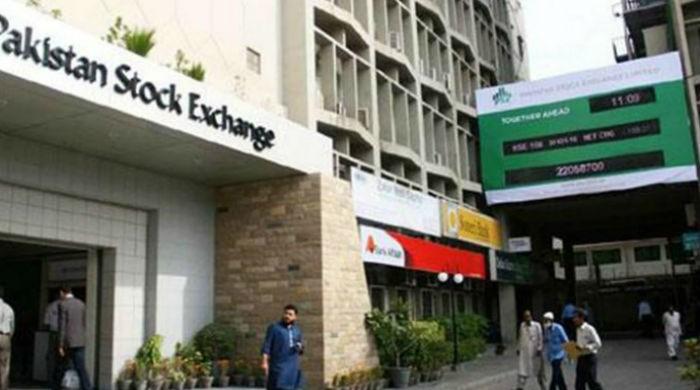
The Pakistan Stock Exchange went up 1.43%, an increase of 463 points, to close at 49,221 points. The overall turnover remained at 356 million shares, which is relatively lower than the 10-days moving average of 457 million shares.
Major gainers for the day were HUBC (+3.81%, US$4.96 million), SEARL (+4.95%, US$3.92 million) and BAHL (+3.75%, US$0.13 million).
The scrip specific volumetric chart was topped by KEL (-1.15% US$6.70 million), DSL (+2.76%, US$0.55 million) and ASL (+4.74%, US$4.17 million).
Top value leaders for the day were TRG (+4.99%, US$9.33 million) followed by ATRL (+0.91%, US$8.17 million) and SNGP (+4.31%, US$7.34 million).

India no longer fastest growing large economy following demonitisation: IMF

WASHINGTON: Modi government`s demonization policy has backfired on the Indian economy as the International Monetary Fund suggests that cancelling nearly 90% of cash in circulation coasted India the mantle of world’s fastest-growing large economy in 2016.
India no longer fastest growing large economy following demonitisation: IMF
In its World Economic Outlook report, IMF said that India’s growth slowed to 6.6% last year from 7.6% in 2015, while the Chinese economy grew by 6.7% in 2016.
The IMF said it trimmed its 2016 forecast for India by one percentage point “primarily” because consumers tightened their purse-strings after demonisatisation.
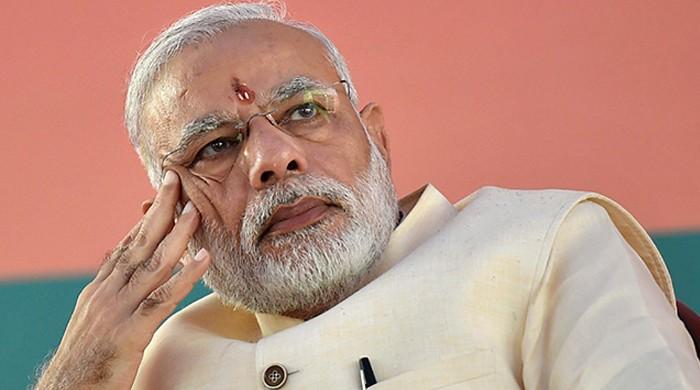
Indian Prime Minister Narendra Modi ordered the withdrawal of 500 and 1,000 rupee notes from circulation in a shock announcement designed to tackle widespread corruption and tax evasion.
Modi said that while people could exchange their old notes for new bills at banks or post offices until the end of the year, or deposit them in their accounts, they would no longer be legal tender from midnight.
"To break the grip of corruption and black money, we have decided that the 500 and 1,000 rupee currency notes presently in use will no longer be legal tender from midnight that is 8 November 2016," he said in a televised address to the nation.
"This means that these notes will not be acceptable for the transaction from midnight onwards."
After a one-day shutdown of all banks and ATMs, new 500 and 2,000 rupee denomination notes would be issued from Thursday by the Reserve Bank of India (RBI), the country´s central bank.
The 500 and 1,000 notes, which are worth around $7.50 and $15 respectively, are the largest bills in use in India which is still a massively cash-intensive economy.
Since coming to power in 2014, Modi has pledged to crack down on so-called black money -- vast piles of wealth kept hidden from the tax authorities -- with a series of new measures, including 10-year jail terms for evaders.
The latest announcement comes a little over a month after the government raised nearly $10 billion through a tax amnesty for Indians to report undeclared income and assets.
But many ordinary Indians say they support the scheme if it forces the rich to pay their taxes by making them bank undeclared income. Only a handful of states observed a call for a nationwide protest strike.
"We are protesting against the undeclared financial emergency imposed by the government and the hardships people across the country are facing because of this illegal decision," said Manish Tiwari of the opposition Congress party.
"The decision to demonetise high-value currency was done without any authority and legislation and is clearly illegal."
Owners of the banned 500 and 1,000 rupees ($7.30, $14.60) notes have until the end of the year to deposit them in a bank, and can only directly exchange a small number for the new currency.
But authorities have struggled to print enough new notes to meet demand and economists say the ensuing cash crunch will hit growth.
Former Prime Minister Manmohan Singh, a respected economist, said last week it would shave at least two percentage points off growth, which topped seven percent in the first half of the financial year.
"I do not disagree with the objectives but it is a monumental case of mismanagement," the Congress party lawmaker told parliament.
"The way demonetisation has been implemented, it will hurt agricultural growth and all those people working in the informal sector."
Over 90 percent of transactions in India are conducted in cash and many of the country's poorest have no access to banking.
Many have been left without enough cash to buy food or daily essentials, while farmers have been unable to buy seeds and small traders say business has fallen off a cliff.
Nonetheless, Modi has repeatedly defended the scheme, accusing its detractors of being tax evaders and urging all Indians to switch to non-cash payment methods.

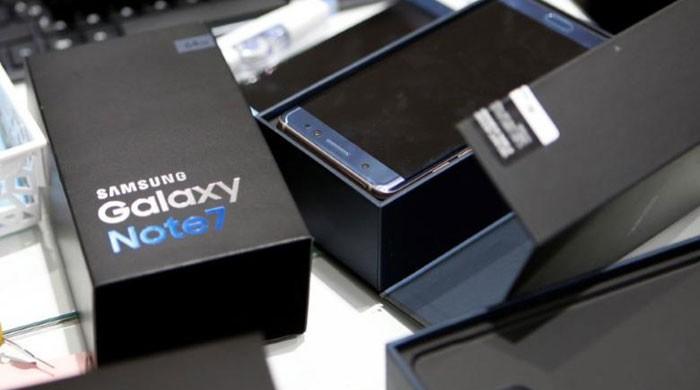
Samsung probe finally finds cause of Note 7 fires

SEOUL: A Samsung Electronics Co Ltd investigation into what caused some Galaxy Note 7 smartphones to catch fire has concluded that the battery was the main reason, a person familiar with the matter told Reuters on Monday.

Samsung probe finally finds cause of Note 7 fires
The world's biggest smartphone maker is seeking to put behind it one of the biggest product safety failures in tech history as it prepares to launch the Galaxy S8, one of its flagship phones, sometime in the first half of this year.
Investors and analysts say it is critical for Samsung to provide a convincing and detailed explanation about what went wrong with the Note 7 and how it will prevent such problems from recurring if it is to regain consumer trust.
"They've got to make sure they come clean and they've got to reassure buyers as to why this won't happen again," said Bryan Ma, Singapore-based analyst for researcher IDC.
The results of the investigation will likely be announced on Jan. 23, a day before it announces detailed fourth-quarter earnings results, said the person, who was not authorized to speak publicly on the matter and declined to be identified.
Koh Dong-jin, head of Samsung's mobile business, will likely announce the results as well as new measures the firm is taking to prevent similar problems in future devices, the person said.
A Samsung spokesman declined to comment.
Samsung initially announced a recall of some 2.5 million Note 7 phones in September and identified the cause of the fire as a manufacturing process problem at one of its suppliers, later identified as affiliate Samsung SDI Co Ltd.
But new Note 7s with what Samsung said were safe batteries from a different supplier continued to catch fire, forcing the company to permanently halt sales of the device and dealing a 6.1 trillion won ($5.2 billion) blow to Samsung's operating profit over three quarters.
"To me it'd be surprising if they said it was a supplier issue," IDC's Ma said, adding he suspects Samsung may not have given enough room for the battery inside the phone.
The company in October said it will examine all aspects of the phone, including hardware design and software, and would hire third-party firms as part of its probe.
The source told Reuters on Monday that Samsung was able to replicate the fires during its investigation and that the cause for the fires could not be explained by hardware design or software-related matters.
While prospects for its smartphone business this year remain a major question mark for Samsung, profits are expected to rise sharply on the back of rising memory chip prices and growing sales of organic light-emitting diode screens for smartphones.