sponsor

sponsor

Slider

Theme images by kelvinjay. Powered by Blogger.

Search This Blog

Blog Archive

Business

[Business]

Flickr Widget

Recent Tube

Business

Technology

Life & style

Games

Sports

Fashion

WhatsApp may let you edit sent messages, track friends in real time

WhatsApp may let you edit sent messages, track friends in real time
Popular messaging app WhatsApp is in the news this week possibly with the most interesting, yet-to-be-confirmed details so far.
Its team is said to be trying out a new feature that will give users a 'second chance' of sorts by letting them cancel or edit messages already received, but not seen (denoted by the double blue tick marks) by, the recipient.
It seems that people will be able to fetch back messages they may have sent in anger, confusion or under influence, once the latest feature is rolled out publicly.
Twitter user @WABetaInfo, known for their new feature- and revisions-spotting ability in WhatsApp, noticed the alleged update in beta version first, alongside the Live Location Tracking and visual status option, all of which are currently reported to be in the testing phase, as per Mashable.
‘Live Location Tracking,’ seen in both operating systems Android and iOS, aids users in WhatsApp groups to track friends, making hangouts more convenient by saving time. The yet-to-be-rolled-out feature can be activated as per command, with options of one, two, and five minutes, The Independent reported.
The third feature is understood to be akin to Instagram and Snapchat stories, where WhatsApp users will be able to add a picture with free-style sketching and text.
At present, the communication app doesn't provide the option to change any sent messages, but offers a 'last seen' status, and the ability to send location through a message.
If the rumours are true, these updates may become a game-changer for the Facebook-owned app.

Beleaguered bees hit by 'deformed wing virus'

Beleaguered bees hit by 'deformed wing virus'
A wing-deforming virus shortens the lifespan of wild honeybees already contending with a startlingly long list of existential threats, researchers said Wednesday.
Spread by microscopic mites, the microbe disrupts bees' foraging and curtails their lives, experiments confirmed for the first time.
"Deformed wing virus strongly reduced the chances for workers to survive to foraging age," scientists reported in the Royal Society journal Proceedings B.
It also "reduced the life expectancy and total activity span" of infected bees, they found.
Bees around the world -- especially in Europe and North America -- have been decimated in recent years by a mysterious blight called "colony collapse disorder", in which entire populations disappear or die out.
Research has pointed an accusing finger at agricultural pesticides, viruses, fungi, parasites, malnutrition because of fewer flowers -- or some combination of the above.
More than just the survival of the bees is at stake.
Scientists recently calculated that 1.4 billion jobs, and three-quarters of crops, depend on pollinators, mainly bees.
All told, there are some 20,000 bee species that fertilise more than 90 percent of the world's 107 major crops.
At the same time, the United Nations estimates that 40 percent of invertebrate pollinators -- mostly bees and butterflies -- are at risk of extinction.
Mini tracking devices
Deformed wing virus has previously been recognised as a threat to bees' well-being, compromising their ability to remember where they have been.
The pathogen is found in most parts of the world; in certain areas up to three-quarters of hives are affected.
It was previously also suspected of affecting flight patterns and lifespan, but evidence was lacking. The new study removes any doubt on this score.
Scientists led by Kristof Benaets from the Laboratory of Socioecology and Social Evolution in Leuven, Belgium, set up an experiment using radiofrequency identification (RFID).
Tiny emitters placed on the bodies of both healthy and virus-infected bees allowed the researchers to follow, and compare, their movements.
"Tracking out-of-hive activity is key in studying the impact of pathogens on honeybee health," the team said.
The virus did not reduce the number or duration of pollen-gathering sorties by worker bees.
But it did cause the insects to begin foraging too young, the experiment revealed.
They were less adept at the task, and died earlier than non-infected bees.
Deformed wing virus "had a strongly negative overall effect," the study concluded.

US jury issues $500 million verdict in Facebook virtual reality lawsuit

US jury issues $500 million verdict in Facebook virtual reality lawsuit
A US jury in Texas on Wednesday ordered Facebook Inc, its virtual reality unit Oculus, and other defendants to pay a combined $500 million to ZeniMax Media Inc, a video game publisher that says Oculus stole its technology.
The jury in federal court in Dallas found Oculus, which Facebook acquired for about $2 billion in 2014, used ZeniMax’s computer code to launch the Rift virtual-reality headset.
ZeniMax alleges that video game designer John Carmack developed core parts of the Rift’s technology while working at a ZeniMax subsidiary. Oculus hired Carmack in 2013.
Facebook's stock was not impacted by the verdict. The company's shares were up 3 percent in after-hours trading following the release of a fourth-quarter earnings report that beat expectations.
ZeniMax Chief Executive Robert Altman hailed the verdict and said in a statement the company was considering seeking an order blocking Oculus and Facebook from using its code. It is unclear what impact that would have on the Rift's market availability.
Though the jury ruled that none of the defendants misappropriated ZeniMax's trade secrets, it found Oculus' use of computer code directly infringed on ZeniMax's copyright. The jurors held Carmack and different Oculus co-founders Palmer Luckey and Brendan Iribe liable for forms of infringement.
The jury also found Oculus liable for breaching a non-disclosure agreement Luckey signed with ZeniMax in 2012, when he began corresponding about virtual reality with Carmack. The two met on an online forum.
Well-known for helping to conceive games such as "Quake" and "Doom," Carmack worked for id Software LLC before that company was acquired by ZeniMax. He is now the chief technology officer at Oculus.
Facebook Chief Executive Mark Zuckerberg testified last month during the three-week trial that none of ZeniMax’s proprietary code was incorporated into the Rift.
Though the jury did not find Facebook directly liable, it would likely be on the hook for damages owed by its subsidiary, absent an agreement stating otherwise.In a statement, Oculus spokeswoman Emily Bauer noted the jury's finding on trade secrets theft and said the company would appeal. "We're obviously disappointed by a few other aspects of today's verdict, but we are undeterred," she said. "Oculus products are built with Oculus technology."

Airbus CEO sees 'flying car' prototype ready by end of year

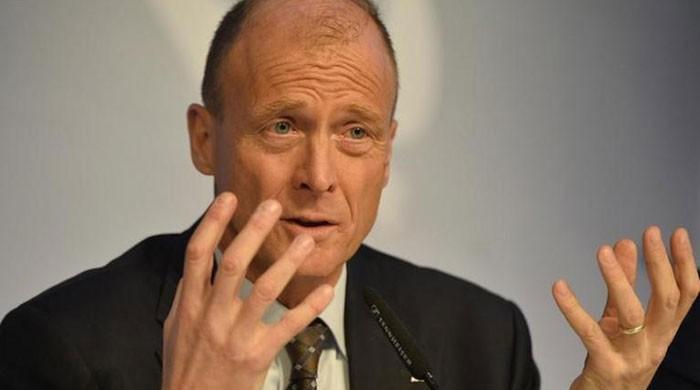
Airbus Group plans to test a prototype for a self-piloted flying car as a way of avoiding gridlock on city roads by the end of the year, the aerospace group's chief executive said on Monday.
Airbus CEO sees 'flying car' prototype ready by end of year
Airbus last year formed a division called Urban Air Mobility that is exploring concepts such as a vehicle to transport individuals or a helicopter-style vehicle that can carry multiple riders. The aim would be for people to book the vehicle using an app, similar to car-sharing schemes.
"One hundred years ago, urban transport went underground, now we have the technological wherewithal to go above ground," Airbus CEO Tom Enders told the DLD digital tech conference in Munich, adding he hoped the Airbus could fly a demonstration vehicle for single-person transport by the end of the year.
"We are in an experimentation phase, we take this development very seriously," he said, adding that Airbus recognized such technologies would have to be clean to avoid further polluting congested cities.
He said using the skies could also reduce costs for city infrastructure planners. "With flying, you don't need to pour billions into concrete bridges and roads," he said.
Enders said Airbus, as the world's largest maker of commercial helicopters, wanted to invest to make the most of new technologies such as autonomous driving and artificial intelligence, to usher in what amounts to an era of flying cars.
"If we ignore these developments, we will be pushed out of important segments of the business," he said.
A spokesman for Airbus declined to say how much the company was investing in urban mobility.

Facebook Germany says it will start tackling fake news in weeks

Facebook said on Sunday it would update its social media platforms in Germany within weeks to reduce the dissemination of fake news.
Facebook Germany says it will start tackling fake news in weeks
"Last month we announced measures to tackle the challenge of fake news on Facebook," the US technology company's German-language newsroom said. "We will put these updates in place in Germany in the coming weeks."
German Justice Minister Heiko Mass has repeatedly called on Facebook to respect laws against defamation in Germany that are stricter than those in the United States.
Other government officials have expressed concern that fake news and "hate speech" on the internet could influence a parliamentary election in September in which chancellor Angela Merkel will seek a fourth term in office.
The Facebook note said the company would make it easier to report items suspected to be fake news and work with external fact-checking organisations.
One of those, German-based Correctiv, has signed the US Poynter International Fact-Checking Code of Principles, it said. Facebook would require others it enlisted to do the same.
Warning signs would be attached to reports identified as noncredible, and the reasons for the decision given.
Facebook would also make it impossible for spammers to forge the websites of reputable news agencies, it said.
Germany has seen an increase in online hate speech following an influx of more than a million migrants.

WhatsApp vulnerable to snooping: report

WhatsApp vulnerable to snooping: report


WhatsApp vulnerable to snooping: report


 LONDON: The Facebook-owned mobile messaging service WhatsApp is vulnerable to interception, the Guardian newspaper reported on Friday, sparking concern over an app advertised as putting an emphasis on privacy.
The report said that WhatsApp messages could be read without its billion-plus users knowing due to a security backdoor in the way the company has implemented its end-to-end encryption protocol.
The system relies on unique security keys "that are traded and verified between users to guarantee communications are secure and cannot be intercepted by a middleman," the report said.
But WhatsApp can force the generation of new encryption keys for offline users "unbeknown to the sender and recipient of the messages," it said.
Tobias Boelter, a cryptography researcher at the University of California told the Guardian: "If WhatsApp is asked by a government agency to disclose its messaging records, it can effectively grant access due to the change in keys."
Boelter said he had reported the backdoor vulnerability to Facebook in April 2016 and was told that Facebook was already aware of the issue but that it was not actively being worked on.
The company said in a statement that it provided a "simple, fast, reliable and secure" service.
It said there was a way of notifying users when a contact´s security code had changed.
"We know the most common reasons this happens are because someone has switched phones or reinstalled WhatsApp.... In these situations, we want to make sure people´s messages are delivered, not lost in transit," it said in a statement.
But the Guardian said it had verified that the security backdoor still exists.
The paper quoted Steffen Tor Jensen, head of information security and digital counter-surveillance at the European-Bahraini Organisation for Human Rights, saying:
"WhatsApp can effectively continue flipping the security keys when devices are offline and re-sending the message, without letting users know of the change till after it has been made, providing an extremely insecure platform".
Facebook bought WhatsApp in 2014 but it continues to operate as a separate app.